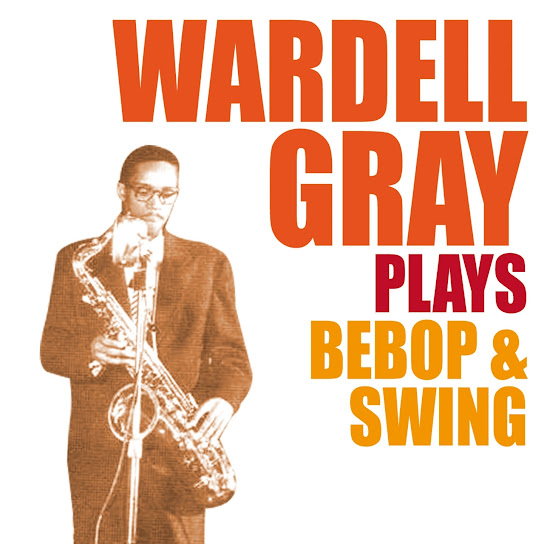
Wardell Gray (February 13, 1921 – May 25, 1955) was an American swing and bebop jazz tenor saxophonist.
Wardell Gray was born in Oklahoma City, the youngest of four children. His early childhood years were spent in Oklahoma, before moving with his family to Detroit, Michigan in 1929.
In early 1935, Gray began attending Northeastern High School, and then transferred to Cass Technical High School, which is noted for having Donald Byrd, Lucky Thompson and Al McKibbon as alumni. He left in 1936, before graduating. Advised by his brother-in-law Junior Warren, as a teenager he started on the clarinet, but after hearing Lester Young on record with Count Basie, he was inspired to switch to the tenor saxophone.
Gray's first musical job was in Isaac Goodwin's small band, a part-time outfit that played local dances. When auditioning for another job, he was heard by Dorothy Patton, a young pianist who was forming a band in the Fraternal Club in Flint, Michigan, and she hired him. After a very happy year there, he moved to Jimmy Raschel's band (Raschel had recorded a few sides earlier in the 1930s but did not do so again) and then on to the Benny Carew band in Grand Rapids, Michigan. It was at around this time that he met Jeanne Goings; together they had a daughter, Anita, who was born in January 1941.
Just up the road from the Congo Club was the Three Sixes; Jeri knew Earl Hines, and when the Hines band came through Detroit in late 1943, she persuaded Earl to hire Wardell - on alto, since there was no tenor vacancy at the time.
This was a big break for the 21-year-old, as the Earl Hines Orchestra was not only nationally-known, but it had nurtured the careers of some of the emerging bebop musicians, including Dizzy Gillespie and Charlie Parker. Although most of them had left by the time Gray joined, playing with the Hines band was still a lively and stimulating experience for the young tenor player. They toured all over the country, and it was when they were in California that Gray met Dorothy Duvall: they were immediately attracted to one another. Dorothy was married but, although the marriage was on the point of collapse, an unfortunate intervention by a "friend" led Gray to believe that this was not so, and he returned to Jeri; they were married in Chicago in September 1945.
Wardell spent approximately three years with Hines, and matured rapidly during this time. He soon became a featured soloist, and the band's recordings show a relaxed, fluent stylist very much in the Lester Young mold. While some of the live Jubilee sessions have been reissued on CD (1), the studio recordings from 1945-46 are still available only on LP.
He left Hines late in 1946, settling in Los Angeles, California; soon after arriving there, he recorded the first session under his own name. This was a quartet session for Eddie Laguna's Sunset label, and on it Wardell had strong support from Dodo Marmarosa on piano. The date produced some excellent sides, notably "Easy Swing" and "The Man I Love"; there is a reissue of the whole session, including alternate takes (2), but a selection is available on (12) .
In Los Angeles, Wardell worked in a number of bands including Benny Carter, the blues singer Ivory Joe Hunter, and the small group that supported singer Billy Eckstine on a tour of the West Coast. But the real focus in LA at this time was in the clubs along Central Avenue, which was still thriving after the boom years brought about by the huge injection of wartime defence spending. Here Wardell found his element, playing in the mainly after-hours sessions in clubs such as Jack's Basket Room, the Down Beat, Lovejoy's and the Club Alabam, and his early success in these sessions led Ross Russell to include him in a studio session he was organising for his Dial label. The session was designed as a showcase for Charlie Parker, but Wardell acquitted himself superbly, showing no sign at all of being over-awed by Parker's presence (3).
It was in the Central Avenue clubs that Wardell held his tenor battles with Dexter Gordon. These two were ideally matched: Wardell's light sound and swift delivery were more than a match for Dexter's big, blustering sound, and their tenor jousts became a kind of symbol for the Central Avenue scene. Gordon later recalled: "There'd be a lot of cats on the stand but by the end of the session it would wind up with Wardell and myself.... His playing was very fluid, very clean.... He had a lot of drive and a profusion of ideas".Their fame began to spread, and Ross Russell managed to get them to simulate one of their battles on "The Chase" (4), which became Wardell's first nationally-known recording and has been assessed as "one of the most exciting musical contests in the history of jazz".
The success of "The Chase" was the break that Wardell needed, and he became increasingly prominent in public sessions in and around LA, including the "Just Jazz" series of jam sessions organised by the disc jockey Gene Norman. There were