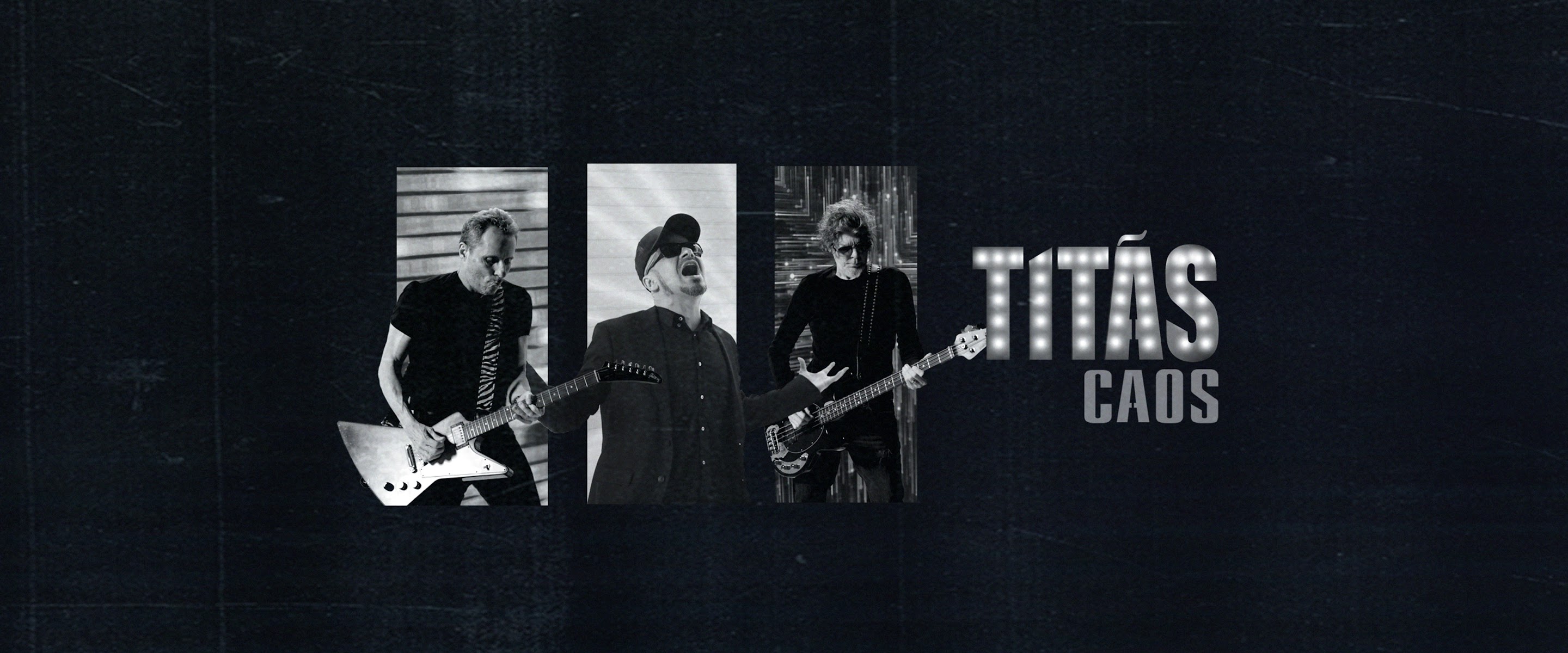
Titãs is one of the most successful rock bands in Brazil, along with Legião Urbana, Os Paralamas do Sucesso and Barão Vermelho. The best known formation of the band was the one from the album "Cabeça Dinossauro" (Dinosaurhead): Nando Reis, Branco Mello, Marcelo Fromer, Arnaldo Antunes, Tony Bellotto, Paulo Miklos, Charles Gavin and Sérgio Britto. Out of these, only Mello, Bellotto, and Britto remain to this day.
History
* Formation and first works
The majority of the integrants of the band met each other at Colégio Equipe in São Paulo at the end of the seventies and, since their first live venue, at the school itself in 1981, the band began to play at several night clubs in the city. The first formation was: Arnaldo Antunes (vocals), Branco Mello (vocals), Marcello Fromer (guitar), Nando Reis (bass guitar), Paulo Miklos (sax and vocals), Sérgio Britto (keyboards and vocals), Tony Bellotto (guitar), Ciro Pessoa (vocals) and André Jung (drums). It was a pop/new wave-styled band, with small creativity and rather odd looks, with tender and little ball neckties. In 1984, without Ciro Pessoa, the band was signed by WEA to record their first album, produced by Pena Schimdt. Although not well sold and promoted, the band spawned at that time their first hit: "Sonífera Ilha"(Sleepy Island).
In 1985, with Charles Gavin replaced André Jung on drums (the latter going on to Ira!), their second album, Televisão (Television), producted by Lulu Santos, was released with slightly better arrangements than in their previous recording. This album had a greater advertising than the first one and brought in more opportunities to the group.
* Up to the Spotlights
In November 1985, Tony Bellotto and Arnaldo Antunes were arrested by heroin traffic and transportation. The episode made a huge impact on the band. The next album, Cabeça Dinossauro, released in June 1986, brought in a lot of tracks criticizing the public institutions ("Estado Violência" (Violence State) and "Polícia" (Police), as well as other "pillars" of Brazilian society such as"Igreja" (Church) and "Família" (Family). The heavy and punk-influenced rhythms and the strong lyrics, caracteristic of the band in this phase, are fully represented in this album which is considered by the critics as one of the best works of the group and one of the landmarks of the Brazilian rock.
Jesus Não Tem Dentes no País dos Banguelas (Jesus doesn't have teeth in the country of the toothless), released at the end of 1987, built on the previous album in tracks like "Nome aos Bois"(Name to the Oxes),"Lugar Nenhum"(Nowhere) and "Desordem"(Disorder), however adding samplers in tracks like "Corações e Mentes"(Hearts and Minds), "Comida"(Food) and "Diversão"(Fun). After some international presentations,the band recorded some of their hits in live venues and released Go Back in 1988.
The producer Liminha was always an important associate of the band since Cabeça Dinossauro, and this association arrived to it's climax in Õ Blésq Blom (untraslatable), one of the most popular productions of the band by that time. Some of the most popular tracks are: "Miséria" (Misery), "Flores" (Flowers),"O Pulso" (The Pulse)and "32 Dentes" (32 Teeth). One of the prominent features of this work was the special guest appearance of a couple of improvisors, called Mauro and Quitéria, discovered by the band in a beach in Recife.
* The First Changes
The band had arrived to a decisive point in it's history and the next album, Tudo ao Mesmo Tempo Agora(Everything at the Same Time Now) mark a strong yaw at the musicians' style, searching for heavier and authorial sound. The members themselves produced the album and the work was possibly the final reason for Arnaldo Antunes to leave for a solo career. The following album, Titanomaquia (Titanomachy), in 1993, continued the previous work in a way, with heavy instrumentation and disgusting lyrics, only now produced by Jack Endino, producer of important bands like Nirvana.
At 1995, Titãs released Domingo (Sunday), a more pop-rock outfit, unless for the track "Eu Não Aguento" (I Can't Take It), a more rap-rock oriented featuring the work of Sérgio Boneka. It was the first time that Titãs recorded a song recorded by another artist or group.
* The Return
Titãs had experienced some loss of their fanbase because the critics took their records as "less good" than the previous works from 80s. This changed in 1997 when they released Titãs - Acústico MTV (Unplugged MTV), an acoustic show recorded for MTV. With guests like Fito Paez, Marisa Monte and Arnaldo Antunes, the album sold pretty good and the band returned to the popularity of previous times.
In the following year, Volume Dois (Volume Two) was released, like a "next chapter" of the Acústico MTV. They recorded some of its previous hits, like "Insensível" (Insensitive) and also a song of Roberto Carlos, "É Preciso Saber Viver" (It's Needed to Know how to Live).
As Dez Mais (The Ten Most) was released in 1999. It wa