There are two bands named Sugarloaf, an American rock band and a Hungarian pop-rock band.
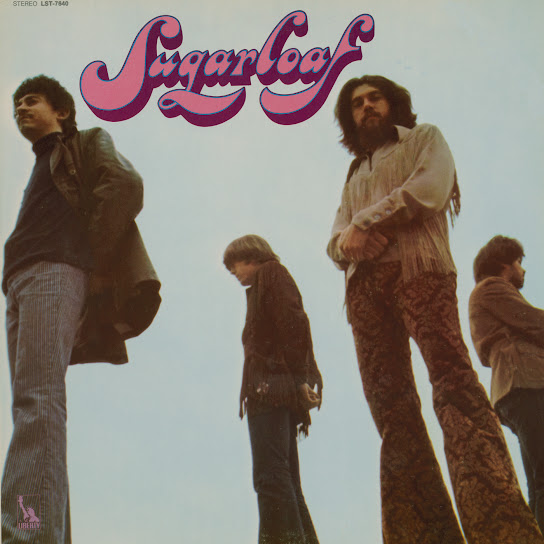
1 Sugarloaf was an American rock band in the 1970s, featuring Jerry Corbetta. The band, which originated in Denver, Colorado, scored two Top 10 hits, with the singles "Green-Eyed Lady" and "Don't Call Us, We'll Call You".
Lead vocalist and keyboardist Jerry Corbetta (September 23, 1947 - September 16, 2016), along with guitarist Bob Webber, played together in the Denver-based band Moonrakers. The Moonrakers had previously released 4 singles on Tower; three of the songs being collected in 2005 on the Colorado garage rock compilation album Highs in the Mid-Sixties, Volume 18 and another having been released earlier on the Pebbles Volume 10 LP. The Moonrakers had evolved from the early 1960s band The Classics (previously The Surfin' Classics, until dropping their surf music focus)—various members of all three incarnations would later appear on Sugarloaf songs.
In late 1968, Corbetta and Webber formed the band Chocolate Hair, including drummer Myron Pollock, who'd played previously with Corbetta, plus Webber's friend, bassist Bob Raymond.
Corbetta and Webber were signed to Frank Slay at this time and began recording demos during 1969. Slay got Chocolate Hair signed to Liberty Records after Liberty liked the demos the band presented to them. Slay then ended up having them put the demos on the album since they sounded so good.
In September 1969 Myron Pollock decided to leave the group and the former drummer for The Surfin' Classics, Bob MacVittie, was recruited. Moonrakers singer Veeder Van Dorn was also brought in to sing on the record, making his most notable appearances on the tracks, "Things Gonna Change Some" and "West of Tomorrow", though he didn't end up becoming a permanent member. "Green-Eyed Lady", recorded at Original Sound Studios in Hollywood, California, which featured MacVittie on drums, was a last minute addition to the album, which was released in the very late spring of 1970.
Just before the album's release, however, the legal department at Liberty suggested the name Chocolate Hair might be taken as having racial overtones. The bandmembers agreed to change their moniker to Sugarloaf, the name of a mountain outside of Boulder, Colorado, where Bob Webber resided in an A-frame house.
The single "Green-Eyed Lady" went on to peak at No. 3 on the Billboard chart in October 1970, while their eponymous debut album got to No. 24.
Just after the first album's release, the group added additional member singer/guitarist/composer Bob Yeazel. Yeazel had previously played in Superband with Jimmy Greenspoon, who would go on to join Three Dog Night. Yeazel would feature heavily on Sugarloaf's second album, Spaceship Earth (January 1971), which would only manage to make No. 111, while the two singles taken from it, "Tongue-In-Cheek" and "Mother Nature's Wine", would peak at No. 55 and No. 88 respectively.
During 1970 and 1971, Sugarloaf had a heavy touring schedule that included appearances with The Who, Deep Purple, Eric Burdon & War and other popular acts of the time. On March 16, 1971 they performed at an after party for the 13th Annual Grammy Awards with Aretha Franklin, Three Dog Night and others.
The band became a sextet when they welcomed bassist Bobby Pickett (not the "Monster Mash" performer) on May 16, 1971 and six days later, they appeared on American Bandstand to play "Green Eyed Lady" and "Mother Nature's Wine".
In 1972 Sugarloaf played on the single "I.O.I.O.", a cover of a Bee Gees song recorded by TV actor Butch Patrick that was produced by Frank Slay.
Bob Yeazel and Bobby Pickett left Sugarloaf sometime in mid to late 1972. Pickett later went on to perform with Etta James, Gregg Allman, the rock group Detective and Cafe R&B. Yeazel stayed in music for a while playing in various bands, then took an eight-year break from performing before he once again began touring, writing songs and recording demos.
Eventually Liberty decided to drop all their artists and Sugarloaf was in limbo in 1973 as Jerry Corbetta signed to Neil Bogart's Brut Records label, which Bogart had created and distributed, via his Buddah Records imprint, for the Brut Fabergé company.
The next album, I Got a Song , released in late 1973, was started as a Corbetta solo record but ended up becoming Sugarloaf's third album when Webber and Raymond rejoined Corbetta, with drummer Larry Ferris, to play on the album and once again began making live appearances. This iteration of Sugarloaf played a spot on The Midnight Special that aired on April 19, 1974.
But after Brut folded, the group's future was once again in question as Corbetta and Frank Slay bought the album back from Bogart and went to a friend's recording studio in Denver in 1974 to record a new song, "Don't Call Us, We'll Call You", with session players Paul Humphries (drums), Max Bennett (bass), Ray Payne (guitar) and a group called the Flying Saucers (Jason Hickman, Mikkel Saks and Dav