Steve Harley (born Stephen Malcolm Ronald Nice in south London on 27 February 1951, died on 17th March 2024 at the age of 73) was an English singer and songwriter, best known as frontman of the rock group Cockney Rebel (subsequently Steve Harley & Cockney Rebel), with whom he still tours.
Growing up in the New Cross area of London and attending Haberdashers' Aske's Hatcham College, his musical career began in the late 1960s when he was busking (with John Crocker) and performing his own songs, some of which were later recorded by him and the band.
The original Cockney Rebel was formed when Harley hooked up with his former folk partner, John Crocker (fiddle / mandolin / guitar), in 1972. They auditioned drummer Stuart Elliott, bassist Paul Jeffreys, and keyboardist Milton Reame-James. They were signed to EMI after playing just five gigs. Their first single "Sebastian", a soaring rock epic, was an immediate success in Europe, though failed to score in the UK singles chart. Their first album, The Human Menagerie, was released in 1973 to critical acclaim, and is still felt by many fans to be their best. The orchestra arrangements were penned by a guy named Andrew Powell who was suggested to the group by their record company. The interesting aspect about Steve's backing band was that they had no real lead guitarist, which equaled to a revolutionary move at that time. Harley's unashamed theatricality, the weird costumes for his stage appearances and the dithyrambic live performance soon made Cockney Rebel one of the most critically acclaimed acts on the circuit, soon gaining a strong cult following.
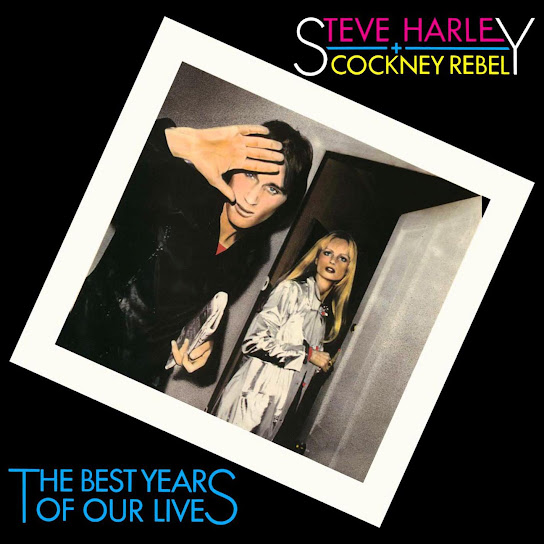
Harley managed to irritate a significant segment of the music press with his self-aggrandisement, even as the music itself was getting rave reviews and gaining a wide audience. Shortly thereafter Harley got in touch with the talented producer Alan Parsons, who had made his first experiences as an assistant engineer during the The Beatles' Abbey Road sessions and had also engineered for a variety of artists since. Alan co-produced Cockney Rebel's next single "Judy Teen" which reached #5 in the UK charts. It was soon agreed that Alan Parsons also be the co-producer for The Psychomodo, which was released in 1974. When it came to orchestration Alan said 'I've got a guy' but Steve refused and replied 'No, use the same guy as last time'. Therefore, as fate would have it, The Psychomodo was the first album Powell and Parsons would work on together, but certainly not the last (as Powell was later steadily involved with The Alan Parsons Project). Soon after the release of the album Steve had his backing band dispersed an fully regrouped, with only drummer Stuart Elliot remaining. The next hit quickly followed, "Mr. Soft", also taken from the album, and after that "Big Big Deal" which was already recorded using the new lineup of Cockney Rebel. In 1975, the album The Best Years of Our Lives hit the market, and it was the first time that the album's sleeve officially stated 'Steve Harley & Cockney Rebel'. On keyboards was South-African Duncan Mackay, a highly talented keyboard wizard who had a strong influence on the sound of the group. "Make Me Smile (Come Up and See Me)" was the big chart buster taken off this record.
Harley, as doggedly unpredictable as ever, started touring the US supporting The Kinks. Overseas "Make Me Smile" was doing fine, and so a Best of album especially put together for the American market was compiled: A Closer Look, a selection from the period when label credits read Cockney Rebel rather than Steve Harley's Cockney Rebel. A next new single "Black or White" failed to enter the charts, same as "White White Dove" in January 1976. That didn't discourage Steve and he released the next album: Timeless Flight which was equally a disappointment commercially, even though it contains very strong moments of Steve and the band. The oddly percussive synth-playing of Duncan Mackay pervaded the album, and on a musical level made it almost as much Duncan's as it was Harley's. Already later that year a new long-player was brought out, Love's a Prima Donna. For that album Harley succeeded gradually to build a bridge between pop and classical music. The Beatles' classic "Here Comes the Sun" was the preview single of the album and charted in the UK's Top Ten in 1976's extraordinarily hot July. In between Steve had a first appearance for The Alan Parsons Project. For their 1977 album I Robot Harley contributed vocals for one of his most charismatic moments, the performance of "The Voice". Unfortunately, this first contribution was also his last. Parsons also often used the instrumental skills of Stuart Elliot and Duncan Mackay for his own project, and they became steady participants in the recording sessions Parsons held at Abbey Road Studios. Steve realized that he should regain the attention of his fans and undertook a vast tour of England in 1976, recording live on the concerts. This eventually spawned the double