Siouxsie and the Banshees was an influential English post-punk band which formed during 1976 in London. Initially associated with the British punk rock scene, the band quickly evolved to create, "A form of post-punk discord full of daring rhythmic and sonic experimentation." The Times would also cite Siouxsie and the Banshees as, "One of the most audacious and uncompromising musical adventurers of the post-punk era." After their split in the year 1996, Siouxsie and drummer Budgie continued to record music as the Creatures duo, which they had formed in the early 1980s as a side project. In 2004, Siouxsie began her solo career.
Their first single "Hong Kong Garden" reached the top ten in the UK in the summer of 1978. Their debut full-length The Scream (1978) is today considered as a classic. NME wrote in its review, "The band sounds like, some unique hybrid of the Velvet Underground mated with much of the ingenuity of Tago Mago-era Can, if any parallel can be drawn... certainly, the traditional three-piece sound has never been used in a more unorthodox fashion with such stunning results." Indeed, "Switch" placed Siouxsie and the Banshees as pioneers of the post-punk movement.
Their sophomore Join Hands (1979), perhaps their darkest record, followed up. Guitarist McKay and drummer Morris had left the band shortly after its release. This change allowed Siouxsie the Banshees to play different music. They recruited drummer Budgie and the gifted John McGeoch, formerly of Magazine, who would play guitars on the three following records. McGeoch's work with Siouxsie the Banshees would later be praised by the likes of Radiohead and the Smiths.
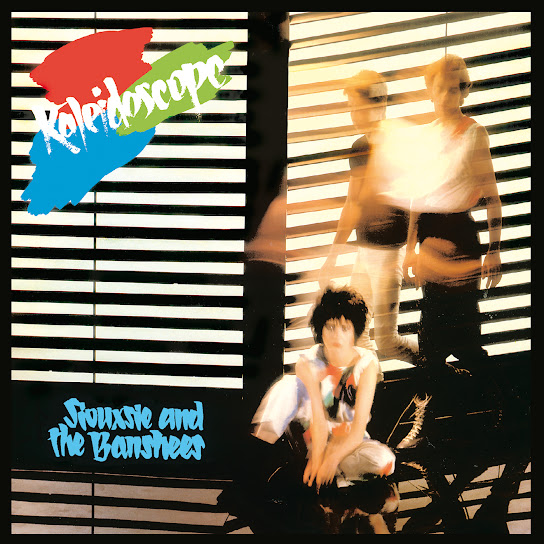
Their third record Kaleidoscope (1980) released. Including tracks "Happy House" and "Christine", showed a brand new musical departure with liquid guitars and atmospheric synthesizers. This eclectic record was a success and it reached the top five in the national UK charts. One year later, fourth full-length Juju (1981), with the vibrant "Spellbound", was yet another success for the band.
The last session McGeoch recorded with Siouxsie and the Banshees was for the "Slowdive" single off the classic A Kiss in the Dreamhouse (1982). The British press greeted this fifth release enthusiastically. NME wrote on its review, "I promise. This music will take your breath away." McGeoch, worn out by the recording process of these songs, was hospitalized on his return from a promotional trip to Madrid, Spain. At the same era, Siouxsie and drummer Budgie formed the Creatures to record music more based on percussion.
In late 1982, McGeoch was replaced by famed Robert Smith, from the Cure. Smith became a full-time member between the years 1982 and 1984. He contributed to the classic live album, and later would be DVD, Nocturne (1983) and to the sixth studio album Hyaena (1984) as co-composer.
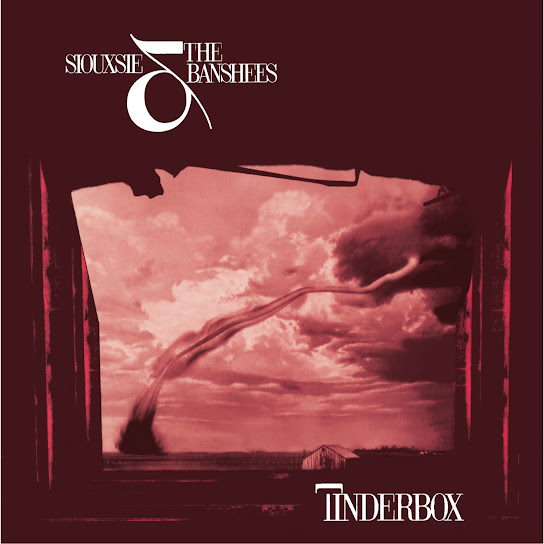
Guitarist John Valentine Carruthers, from band Clock DVA, replaced Smith in May, 1984. He played on the successful seventh full-length Tinderbox (1986), which included the first hit single of the band in the US, "Cities in Dust". The following covers album Through the Looking Glass (1987) with "This Wheel's on Fire", allowed the band to broaden up their sound.
Following a lengthy break, the rest of the band recruited another, new guitarist Jon Klein, from Specimen and the multi-instrumentalist Martin McCarrick to record ninth studio Peepshow (1988). The hit single "Peek-a-Boo" was considered as avant-garde for its abrasive sounds.
After the most impressive tour of their career, Siouxsie and the Banshees stopped for a while and then the Creatures reappeared with critically acclaimed sophomore Boomerang (1989). One of the most languorous songs from this record, "Killing Time", was covered live by Jeff Buckley a few years later.
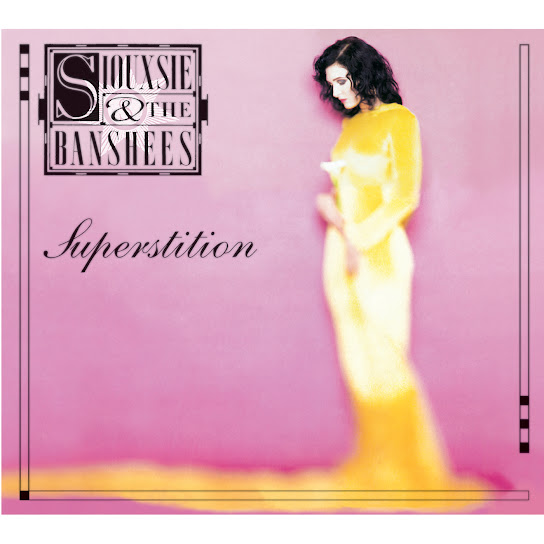
In May 13th, 1991 Siouxsie the Banshees returned with the single "Kiss Them for Me", mixing the Beatles strings over a dance rhythm. This track peaked in the US singles charts at number 23, allowing them to reach a new audience. Melody Maker praised the last two studio albums by the band, Superstition (1991) and The Rapture (1995). The latter, partially produced by John Cale, included the swansong "Forever".
Morrissey later recorded a duet with Siouxsie titled "Interlude". This one, off-single was published under the banner of the two artists' names. After 20 years together, Siouxsie and the Banshees split in April, 1996. Siouxsie and Budgie thet announced that they would carry on recording as the Creatures. They released their third studio Anima Animus (1999) to critical acclaim.
The box set Downside Up (2004) was released, compiling 51 unreleased B-sides and the highly praised out-of-print The Thorn EP. Most of these numbers like, "Something Wicked (This Way Comes)" and "Red over White", are considered by fans as 'classics.' After carrying on recording as the Creatures, Siouxsie released her debut solo Mantaray (2007). The record was hailed by both Pitchfork and Mojo.