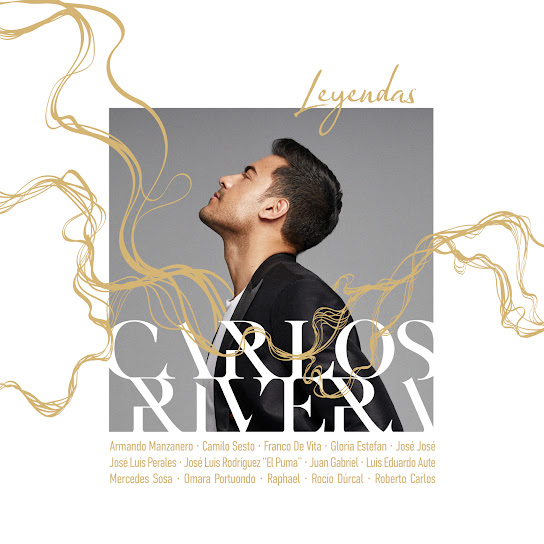
Roberto Carlos (born April 19, 1941 in Cachoeiro de Itapemirim, Espírito Santo, Brazil) initiated a major revolution of customs in Brazil in the '60s. Reaching success in a period coinciding with the youth movement started by the The Beatles that was taking over the world, Carlos was the leader of Jovem Guarda ("Young Guard") . He led the TV show that became a generic denomination of a musical style and what was a definitive change of face to the Brazilian phonographic market and of the very art of marketing itself (with the advent of an aggressive merchandising of the JG's top figures, including films, clothes, etc.), encompassing deep behavioral/gestual/language influences widespread through his entire generation. His light music, derived from British pop, and his (and his partner's Erasmo Carlos) lyrics (happy, humorous, and full of fashionable youth slang and naïve though unexpectedly sexual) were deeply contrasting to the serious MPB, with its somber images and protest songs. After all, Brazil was living in a dark period of the military dictatorship, or the "years of lead" as they became known.
A few years later, in the late '60s, Carlos (counseled by his advisers) changed his style to become the most successful romantic artist in Brazil. Having written (always with Erasmo Carlos) some of the most beautiful songs in this style (such as "Detalhes," "Sua Estupidez," "Jesus Cristo," "Debaixo dos Caracóis dos Seus Cabelos," etc.), Carlos accumulated virtually all possible accomplishments as a highly successful artist, including a solid international career with awards like the Grammy and top positions on Billboard's Latin charts. Though the adherence to a worn-out sentimental formula proved to be affective in commercial terms (more than 70 million albums sold in his career), it ultimately led him to be known, in the '80s and '90s, as a cheesy artist by youngsters and part of the adult listeners. Nevertheless, the mid-'90s witnessed a resurgence of Jovem Guarda talents through tributes of new rockers and Carlos reached the 21st century uncontestedly enjoying his absolute title: the King.
Roberto Carlos was from a lower-middle-class family. At six, he lost one of his legs and began using a prosthesis. At nine, he debuted on his home city's local radio. In 1955, he moved to Niterói (Rio de Janeiro) and then to Lins de Vasconcelos (a suburb of Rio de Janeiro), where he started to get into rock through Bill Haley, Elvis Presley, and Little Richard, at the same time he met Carlos Imperial, also from his hometown, who, as a TV and radio producer, would be of considerable importance to Carlos's early professional years. Two years later, Carlos performed at TV Tupi, singing "Tutti Frutti" (R. Penniman/J. Lubin/D. La Bostrie). In that period, he was scheduled to open a Bill Haley show at the Maracanazinho (Rio), when he became acquainted with Erasmo Carlos (then Erasmo Esteves). In 1958, Carlos met the "Matoso gang," as were known the future artists Tim Maia, Jorge Ben, and the same Erasmo Esteves, among others, who would meet at Matoso Street at Tijuca (a neighborhood of Rio). Carlos, Erasmo, and Tim Maia (together with Edson Trindade, Arlênio Lívio, and José Roberto "China") formed the group the Snacks (later the Sputniks), playing balls and performing on TV (including at Carlos Imperial's Clube do Rock on TV Continental, where Carlos was already a regular). The group was soon dissolved due to the incompatibility between Carlos and Maia.
After working as an extra in several films such as Agüenta o Rojão and Minha Sogra é da Polícia (in which they backed up Cauby Peixoto on one song), Carlos and Erasmo played together in Erasmo's quartet the Snakes until Carlos was called by Imperial to take Carlos Lyra's place in the Os Terríveis band that played Elvis Presley covers on TV shows and live performances contracted by Imperial.
Soon, Carlos left the band to try to become a bossa nova artist. Strongly influenced by João Gilberto in that period, Carlos often tried to "sit-in" at the famous temples Plaza nightclub and the clubs of the Beco das Garrafas, but to no avail. A testimony of his ephemeral and unaccomplished bossa nova phase is Carlos' first album, with "João e Maria" and "Fora do Tom" (both by Imperial). In August 1960, a new release was launched, again in the bossa vein, "Brotinho Sem Juízo" and "Canção do Amor Nenhum" (again, both by Imperial). At the same time, Carlos would participate regularly in shows presented by Imperial, Os Brotos Comandam (TV Continental and Rádio Guanabara) and Festa de Brotos (TV Tupi). In 1961, in the same year in which Carlos recorded his first LP (a derivation toward boleros and ballads, Louco por Você) that earned some acceptance at the time (3,500 copies sold in one year), he accepted the suggestion of the record company CBS and changed his style to youth music, starting to write songs with the composer/lyricist who would become his most important collaborator: Erasmo Ca