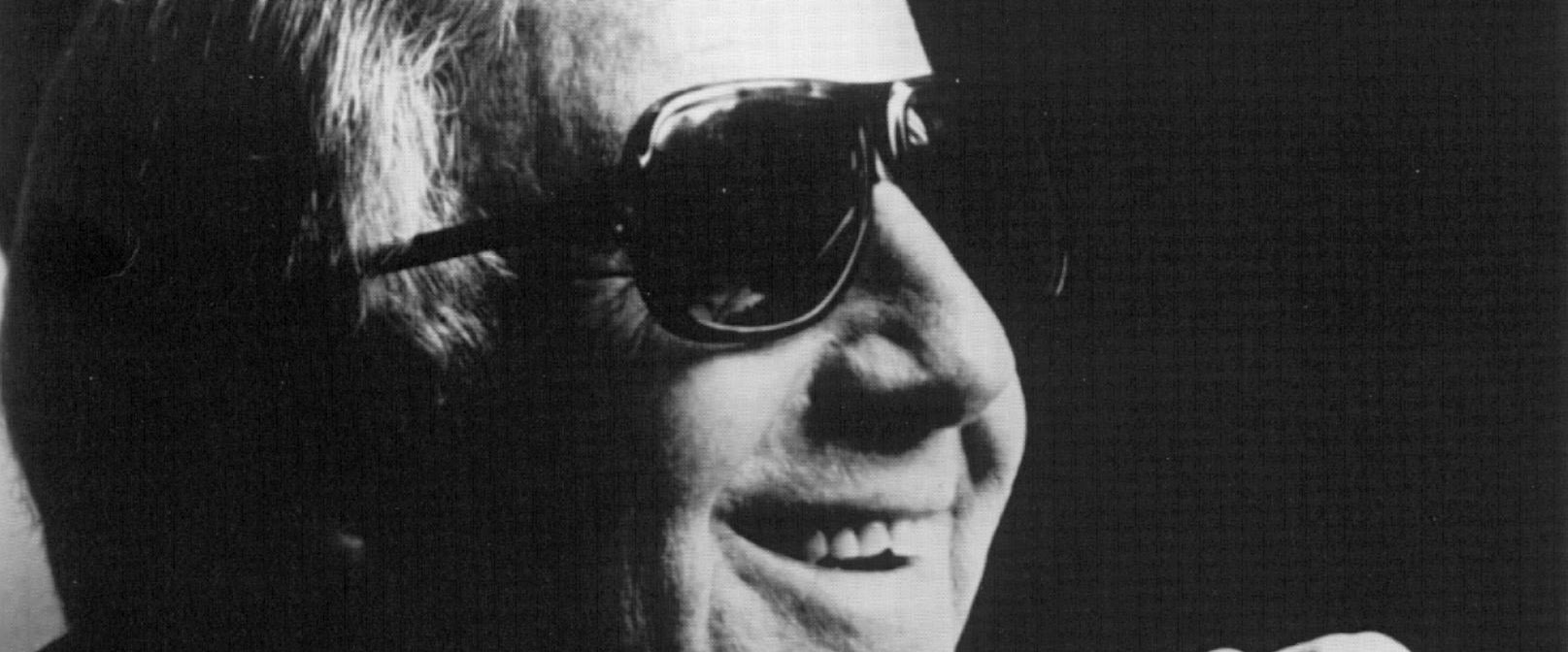
George Shearing (13 August 1919 – February 14, 2011) was a well-known jazz pianist and inventor of the famous "Shearing Sound": a form of smooth cocktail jazz characterised by block chords played on the piano along with similar chords played on the vibraphone.
Shearing was born in the Battersea area of London, United Kingdom. Congenitally blind, he was the youngest of nine children. He started to learn piano at the age of three. After limited training and extensive listening to recorded jazz, he began playing at hotels, clubs and pubs in the London area, sometimes solo, occasionally with dance bands. In 1940, Shearing joined Harry Parry's popular band and became a star in Britain, performing for the BBC, playing with Stéphane Grappelli's London-based groups of the early 1940s, and winning seven consecutive Melody Maker polls.
In 1946, Shearing established himself in the United States. In 1955, he became a naturalized citizen of the United States. Leading a quintet (piano with guitar, bass, drums and vibraphone), which over the years included Cal Tjader, Margie Hyams, Denzil Best, Israel Crosby, Joe Pass and Gary Burton, Shearing had a succession of hugely popular records including September In The Rain and his own composition, Lullaby Of Birdland (1952). His style, including the joint playing of the melody by piano and vibraphone, was also widely copied, becoming part of the idiom of pop music, so that his records from that period now sound far less innovative than they did at the time. Later, Shearing played with a trio, as a solo and increasingly in duo. Among his collaborations have been sets with the Montgomery Brothers, Marian McPartland, Brian Torff, Jim Hall, Hank Jones and Kenny Davern.
In the 1970s, Shearing's profile had been lowered considerably, but upon signing with Concord Records in 1979, Shearing found himself enjoying a renaissance.
Over the years, Shearing has also collaborated with singers including Nat King Cole, Peggy Lee, Ernestine Anderson, Carmen McRae, and most notably, Mel Tormé, with whom he performed frequently in the late 80s and early 90s at festivals, on radio and for recordings.
Recently, Shearing collaborated with the John Pizzarelli Trio to create the album The Rare Delight of You, which garnered extremely good reviews. The album cover, featuring Pizzarelli and Shearing posing in front of a solid blue background, was designed to resemble the cover of Nat King Cole Sings George Shearing Plays, a legendary jazz recording with which it shares some similarities in style.
Shearing's interest in classical music resulted in some performances with concert orchestras in the 1950s and 1960s, and his solo's frequently draw upon the music of Debussy and, particularly, Erik Satie for inspiration. Shearing also made a recording with the classical French horn player Barry Tuckwell.
Shearing wrote a number of jazz arrangements of hymn tunes for the organ in collaboration with organist Dale Wood, that have been published in sheet music form.
(2) For a long stretch of time in the 1950s and early '60s, George Shearing had one of the most popular jazz combos on the planet -- so much so that, in the usual jazz tradition of distrusting popular success, he tended to be underappreciated. Shearing's main claim to fame was the invention of a unique quintet sound, derived from a combination of piano, vibraphone, electric guitar, bass, and drums. Within this context, Shearing would play in a style he called "locked hands," which he picked up and refined from Milt Buckner's early-'40s work with the Lionel Hampton band, as well as Glenn Miller's sax section and the King Cole Trio. Stating the melody on the piano with closely knit, harmonized block chords, with the vibes and guitar tripling the melody in unison, Shearing sold tons of records for MGM and Capitol in his heyday.
The wild success of this urbane sound obscures Shearing's other great contribution during this time, for he was also a pioneer of exciting, small-combo Afro-Cuban jazz in the '50s. Indeed, Cal Tjader first caught the Latin jazz bug while playing with Shearing, and the English bandleader also employed such esteemed congueros as Mongo Santamaria, Willie Bobo, and Armando Peraza. As a composer, Shearing was best known for the imperishable, uniquely constructed bop standard "Lullaby of Birdland," as well as "Conception" and "Consternation." His solo style, though all his own, reflected the influences of the great boogie-woogie pianists and classical players, as well as those of Fats Waller, Earl Hines, Teddy Wilson, Erroll Garner, Art Tatum, and Bud Powell -- and fellow pianists long admired his light, refined touch. He was also known to play accordion and sing in a modest voice on occasion.
Shearing, who was born blind, began playing the piano at the age of three, receiving some music training at the Linden Lodge School for the Blind in London as a teenager but picking up the jazz influence from Teddy Wilson and Fats W