Charles Edward "Charlie" Haden (August 6, 1937 – July 11, 2014) was an American jazz double bass player, known for his long association with saxophonist Ornette Coleman, pianist Keith Jarrett, and his Liberation Music Orchestra, a group he co-led with pianist Carla Bley.
Haden was born in Shenandoah, Iowa, and was raised on a farm. His family was exceptionally musical; they performed together frequently on the radio, playing country music and American folk songs as the Haden Family Band. Haden was musical from an early age, and made his professional debut as a singer, when he was two years old, on the Haden Family's radio show. He continued singing with his family until he contracted a bulbar form of polio around his throat and facial muscles when he was 15. The polio damaged his throat muscles and vocal cords, and as a result, Haden was unable to control his pitch while singing. At age 14, before he had contracted polio, Haden had become interested in jazz, and began playing his older brother's double bass. He developed this interest after he lost the ability to sing. Haden's interest in the instrument was not sparked by jazz bass alone, but by the classical bass he heard frequently on the radio. He was particularly fascinated by the bass he heard in compositions by Bach. Eventually he set his sights on Los Angeles, and to save money for the trip took a job as house bassist for ABC-TV's Ozark Jubilee in Springfield, Missouri.
Haden moved to Los Angeles in 1957 in search of pianist Hampton Hawes. He turned down a scholarship at Oberlin College, which did not have an established jazz program at the time, to attend Westlake College of Music in Los Angeles. His first recordings were made that year with Paul Bley, with whom he worked until 1959. He also played with Art Pepper for four weeks in 1957, and with Hampton Hawes from 1958-1959.
He began recording with Ornette Coleman shortly after, including the important The Shape of Jazz to Come. Haden's folk-influenced style complemented the microtonal, Texas blues elements of Coleman. In 1959, the Coleman Quartet moved to New York City and secured a residency at the Five Spot Café. This residency lasted six weeks, and represented the beginnings of free, or avant-garde jazz. The Ornette Coleman Quartet played everything by ear, as Haden explained: “At first when we were playing and improvising, we kind of followed the pattern of the song, sometimes. Then, when we got to New York, Ornette wasn’t playing on the song patterns, like the bridge and the interlude and stuff like that. He would just play. And that’s when I started just following him and playing the chord changes that he was playing: on-the-spot new chord structures made up according to how he felt at any given moment.” Haden’s narcotics addiction forced him to leave Coleman’s band in August, 1960. He went to rehabilitation in September, 1963 at Synanon houses in Santa Monica, California and San Francisco, California.
He resumed his career in 1964, working with John Handy and Danny Zeitlin’s trio, and performing with Archie Shepp in California and Europe. He also did freelance work from 1966 to 1967, performing with Henry “Red” Allen, Pee Wee Russell, Attila Zoller, Bobby Timmons, Tony Scott, and the Thad Jones—Mel Lewis Orchestra. He recorded with Roswell Rudd in 1966, and returned to Ornette Coleman’s group in 1967. This group remained active until the early 1970s. Haden was known for being able to follow the shifting directions and modulations of Coleman’s improvised lines skillfully.
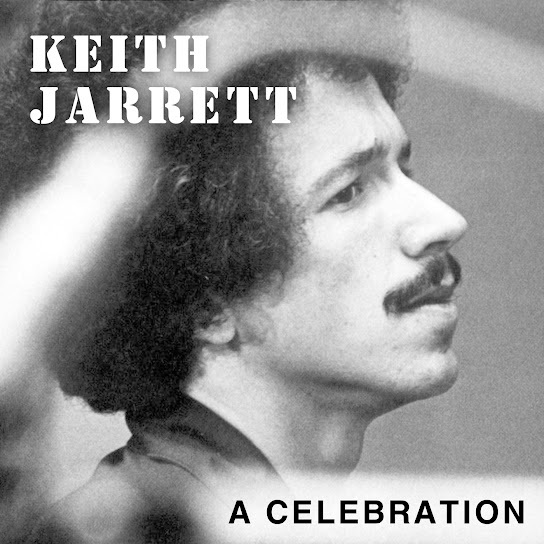
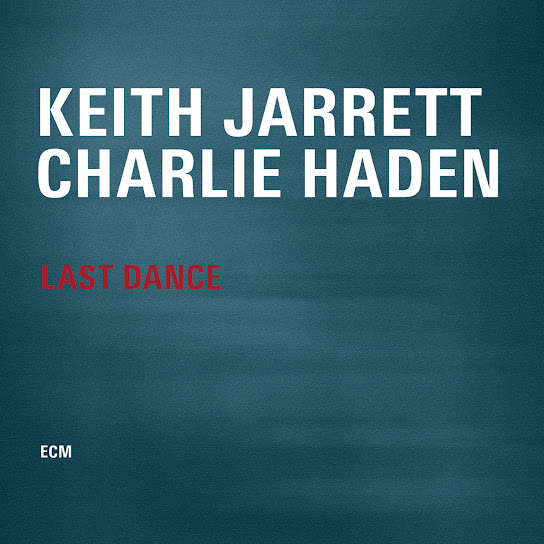
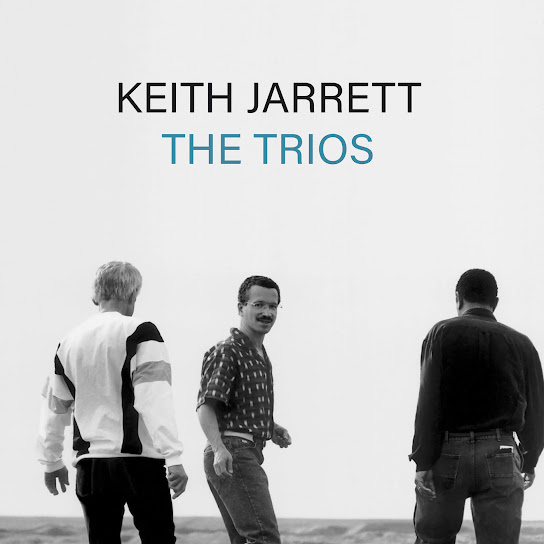
Haden joined Keith Jarrett's trio and his 'American Quartet' from 1967 to 1976 with Paul Motian and Dewey Redman. The group also consisted of percussionist Guilherme Frano. He also played in the collective Old and New Dreams, which consisted of Don Cherry, Dewey Redman, and Ed Blackwell, who were members of Coleman’s band. These musicians believed they understood and could perform Coleman’s improvisational concept, and applied it to their work in this band, continuing to play Coleman’s music in addition to their own original compositions.
Haden went on to lead the Liberation Music Orchestra in the 1970s. Largely arranged by Carla Bley, their music was very experimental, exploring the realms of free jazz and political music at the same time; the first album focused specifically on the Spanish Civil War. Carla Bley’s arrangements underscore compositions by Antonín Dvořák, Samuel Barber, Bill Frisell, and Pat Metheny. They also quote lines from songs such as “Dixie,” “The Star Spangled Banner,” and “Battle Hymn of the Republic,” which the LMO intentionally satirized and portrayed ironically. The LMO has had a shifting membership comprising a "who's who" of jazz instrumentalists, and consisted of twelve members from multicultural backgrounds. Some of the members included Ahnee Sharon Freeman (French horn), Joe Daley (tuba), Michael Rodriguez (trumpet), Miguel Zenón (alto saxophone), Chris Cheek (tenor saxophone), Curtis F