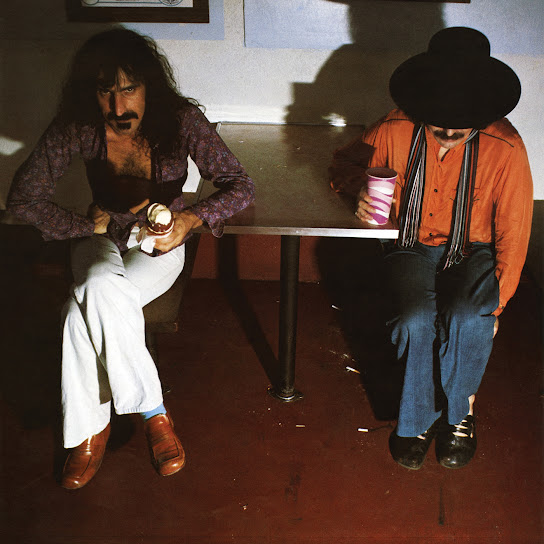
Captain Beefheart & His Magic Band was an American experimental rock band formed in Lancaster, California in 1964. They made music that has occasionally been dubbed "avant garde-blues". Their music was characterized by bluesy melodies, shambolic instrumentation, idiosyncratic, unbound timings, the growls and shrieks of Beefheart's vocals and his surreal, poetic lyrics. Throughout their career, the band's musical direction was tightly controlled by Don Van Vliet (1941 - 2010), aka Captain Beefheart, who subjected the band to intense regimes of rehearsal; this tension combined with poor salary contributing to the break-up of the original Magic Band. Beefheart reformed a new band of musicians under the name, but left the music industry for good in 1982 to pursue his career as a painter.
With the exception of British disc jockey John Peel, they saw little critical endorsement or recognition in their years active, but their influence was highly significant; to later avant-garde artists such as The Residents and Tom Waits, as well as to the Punk movement, which appreciated both their stripped-down sound and Van Vliet's unleashed, expressive vocal delivery. In recent years their importance has been acknowledged by the mainstream music press, with Trout Mask Replica (1969) reaching number 58 on Rolling Stone Magazine's 500 Greatest Albums of All Time list (beating albums like Led Zeppelin's Physical Graffiti and John Lennon's Imagine). In 1988 Fast N Bulbous: A Tribute to Captain Beefheart, was released, featuring such diverse artists as XTC, Sonic Youth and The Mock Turtles.
The Magic Band's first formation was in 1965 when Don Glen Vliet was contacted by Alex Snouffer, a local Lancaster, California rhythm and blues guitarist. Together they assembled the first Magic Band and at this point Don Vliet became "Don Van Vliet", whilst Alex Snouffer became "Alex St. Claire". Nearly all the musicians that Van Vliet worked with were given stage names; Van Vliet's being "Captain Beefheart". The first Magic Band was completed with Doug Moon on guitar, Jerry Handley on bass and Vic Mortenson on drums, who was soon replaced by Paul Blakely.
Captain Beefheart & the Magic Band signed to A&M and released two 1966 singles, a version of Bo Diddley's "Diddy Wah Diddy" followed by "Moonchild," which was written by David Gates. Both were hits in Los Angeles. The band began to play music venues catering to underground artists such as the Avalon Ballroom in San Francisco.
Sometime in 1966 demos of what became the Safe as Milk material were submitted to A&M. Jerry Moss (the "M" in A&M) reportedly described the new direction as "too negative" and they were dropped from the label. But by the end of 1966 they were signed to Buddah Records and John French had joined as drummer. French would be the mainstay of the band until 1971, and he returned twice after that (1975–77 and 1980, as a guitarist on the records Doc at the Radar Station and Ice Cream for Crow; he also led the reformed Magic Band). French had the patience required to be able to translate Van Vliet's musical ideas (often expressed by whistling or banging on the piano) for the other players. In French's absence this role was taken over by Bill Harkleroad.
The Safe as Milk material needed much more work, and 20-year-old guitar prodigy Ry Cooder was asked to help. They began recording in Spring 1967, with Richard Perry producing (his first job as producer). Cooder left shortly after recording the album, which was released in September 1967. Among those who took notice were The Beatles. John Lennon displayed two of the album's promotional bumper stickers in the sunroom at his home, and later the Beatles planned to sign Beefheart to their experimental Zapple label. (Those plans were scrapped after Allen Klein took over the group's management.)
In August, guitarist Jeff Cotton, aka Antennae Jimmy Semens, was recruited and by November the Snouffer/Cotton/Handley/French line-up began recording for the second album. It is said to have been intended to be a double album called It Comes to You in a Plain Brown Wrapper with one disc recorded live (or live in the studio). What finally emerged in October 1968 was Strictly Personal, released on producer Bob Krasnow's Blue Thumb Records. After the album was released Van Vliet initiated through interviews a myth which alleged that the tapes of the album had been remixed by Krasnow without the band's knowledge, and further, that he had ruined it by adding modish psychedelic effects (phasing, backwards tapes, etc). The myth has nonetheless persisted, and is included as fact in Jason Ankeny's Allmusic biography. This was also the period in which Van Vliet furthered his own mythology through interviews. Earlier recordings of two of the Strictly Personal songs and two other songs were released by Buddah in 1971 under the title Mirror Man. The original release bore a sleeve note claiming that the material had been recorded "one night in Los Ange


 6:00
6:00